Residens – Flytande landskap nabbteeri
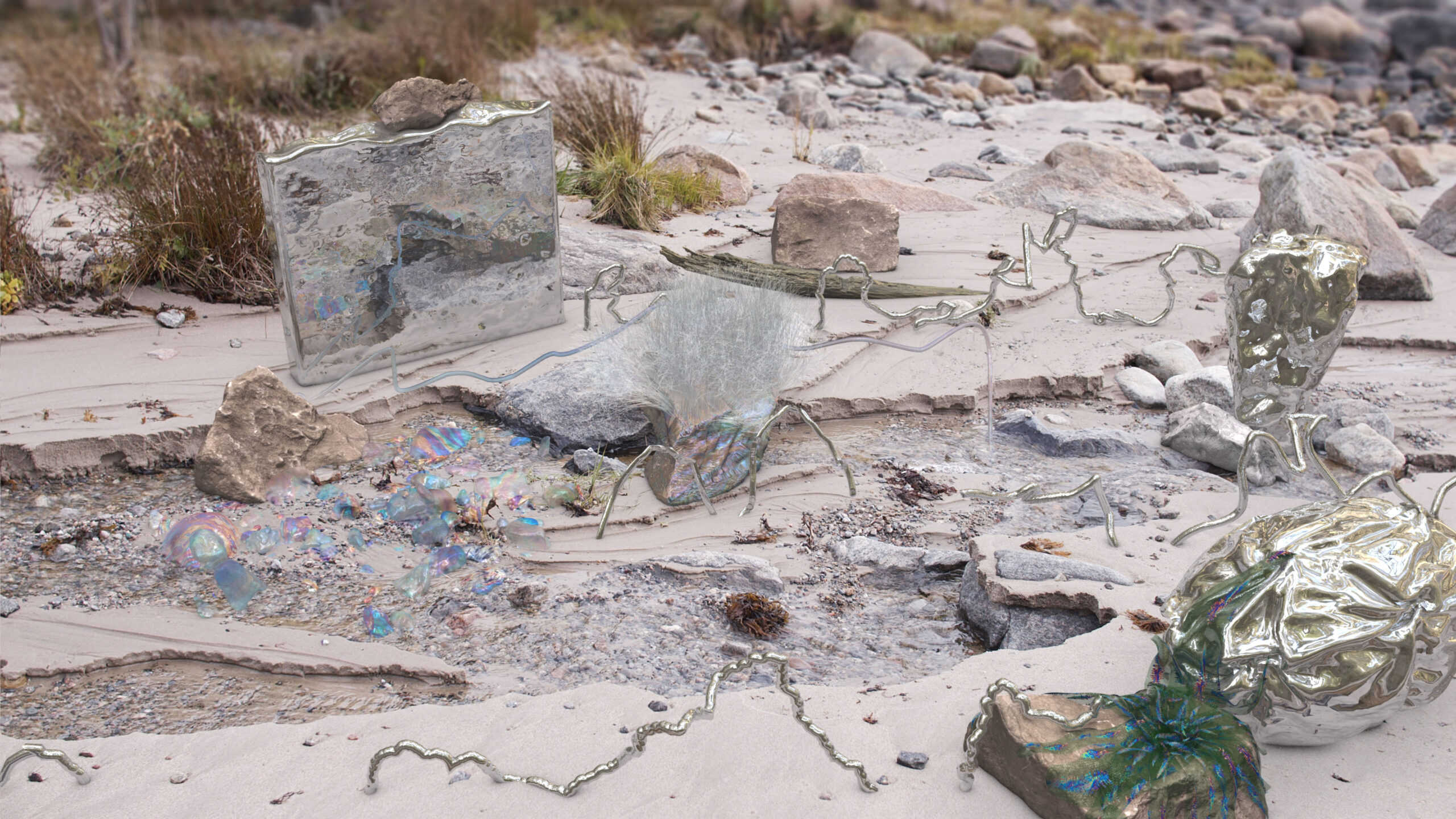
Åkern är stolta att presentera nabbteeri (FI) som residenskonstnärer i ”Residens – Flytande landskap”. nabbteeri är en fyrhänt konstnärlig enhet grundad 2008 av konstnärerna Maria Teeri och Janne Nabb. Deras platssensitiva och experimentella arbete tar sitt uttryck i installationer och digitala verk som relaterar till lokal materialitet och mellanartliga gemenskaper.
nabbteeri har tidigare ställt ut på platser från Norðurlandahúsið i Tórshavn till Art Sonje Center i Seoul, deltagit i Venedigbiennalen 2019 och visats på Färgfabriken i Stockholm 2023. Sommaren 2025 medverkade de i Helsingforsbiennalen
Residens Flytande landskap genomförs med stöd av Region Gävleborg samt sker i samverkan med IASPIS, Konstnärsnämndens internationella program för bild och form. FOTO: nabbteeri
——–
(something whose name you have forgotten
something whose name you have forgotten or do not know)
Failures do not occur twice in a same way. They give rise to other forms of life.
According to ANTTI SALMINEN, art’s revitalizing and destructing power escapes computational cognition into the unpredictable, non-human twilight, seeking alliances there.
FRANCISCO MARTÍNEZ formulates, how current discourses about failure ignore that failure provides space for thinking and self-assessment by interrupting the expected flow of things. These reflexions overlook how wasted time can be socially and culturally productive, especially in contexts where we are impelled to avoid what is inefficient, distorted, outside of the straight line.
Accidents and brokenness do not always involve mistakes and misbehaviour, but rather use, testing and tinkering. Likewise, failure does not have to be understood as the end of knowledge; it can be considered as an experiential process integral to learning. It’s hard to replicate, hard to reproduce, it has an aura.
MINNA TÖRMÄ traces the early history of describing a landscape experience. The Chinese expression for a landscape painting, shan shui hua, could be translated ”mountain-water picture”. The mountain represents yang and water represents yin: these two are the basic forces of Chinese cosmological thought. Originally, yang referred to flags waving in the sun or ”bright”, the basic meaning of yin being ”cloudy”. The southern, lighter side of a mountain is yang and the northern, dark side, yin. In the Chinese world, a river usually represents water; its northern side is yang, southern yin. The river is viewed from above, so the northern side appears to reflect light while the southern side is in shadow. We follow the sound of the water. The northern side is where most mushrooms are found.
Bergsjö ligger i nordligaste Hälsinglands inland kring Storsjön och Älgeredssjön. Socknen har kuperad dalgångsbygd vid sjöarna och är i övrigt höglänt sjörik skogsbygd. Namnet (1344 Bersium) har oklar tolkning. Förleden kan möjligen innehålla Bergh syftande på byn Berge. Efterleden sjö torde syfta på någon av sjöarna i socknen, kanske Kyrksjön. (the Last Universal Common Ancestor)
-nabbteeri
——–
nabbteeri is a four-handed artistic unit currently based in
Övermark, Finland. It was founded in 2008, and consists of
Finnish artists Janne Nabb (b. 1984) and Maria Teeri (b. 1985).
nabbteeri’s site-sensitive, experimental works often take the
form of installations that intermingle with local materialities,
nurturing connections with the surrounding unpaved soil and
multispecies communities. Both digital and more traditional
historical craft techniques lie at the core of their practice.
Over the years nabbteeri’s work has been inhabiting multiple
venues between Norðurlandahúsið in Tórshavn, Faroe Islands,
and Art Sonje Center in Seoul, South Korea. In 2019, nabbteeri
took part in the 58th Biennale Arte in Venice. They participated in Helsinki Biennial 2025 and exhibited in Färgfabriken, Stockholm 2023.
The residency is made possible through collaboration withIASPIS – the Swedish Arts Grants Committee’s international programme for visual and applied arts and with support from Region Gävleborg.